
AHSG/Commercial USA members, suppliers dig deep at convention
By Sharyn Bernard

[San Antonio] At American Home Surfaces Group (AHSG)/Commercial USA’s biennial convention, vendors and members came together to do business, catch up and take the measure of a flooring market that still calls for cautious optimism.
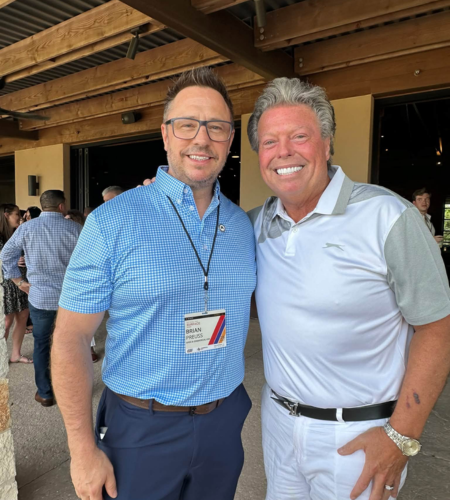
“This was my first Summit as president, and the energy in the room was great from the opening session through the last booth conversation,” said Brian Preuss, who was named president of the group in May. “Members came to learn, and suppliers came ready to do business.”
Preuss said the members resonated with the trade show and the programming alike. “I was really happy with the members interest in our suppliers, making the tradeshow a success. Our members are hungry for education. I had members coming up to me all weekend to talk about the panels. They weren’t just being polite. They were telling me what they’re going to do differently in their businesses. That tells me we’re on the right track, and education will stay at the center of what we do.”
What’s more, “the peer-to-peer networking is the strength of the alliance. I witnessed our [regional vice presidents] making introductions, so we could see members working together as we move forward,” Preuss said.
Preuss noted AHSG/Commercial USA’s growth over the two years since the group’s last convention, with 91 new members joining — 39 in AHSG, 40 in Commercial USA and 12 in both groups. As well, the group counted 10 additional suppliers to its roster, and 44 vendors exhibited at the expo. More than 325 members attended this year’s convention, held at the JW Marriott San Antonio Hill Country Resort & Spa.
AHSG hosts its member convention every other year, but “we haven’t made a decision about our next Summit yet. But we are already excited to begin planning on the next summit as well as additional supplier partner/ member connection events in the time being,” Preuss said.
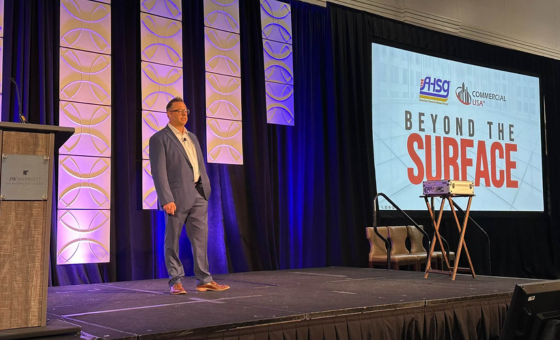
Jon Petz, an award-winning keynote speaker, emceed the convention, bringing unmatched energy and enthusiasm to the sessions. One message he stressed to the group was simplicity. “Simple is significant,” he noted and urged member dealers and vendors to “reimagine simple moments,” as a way to meet challenges and drive change.
New Faces, Familiar Faces
The vendor expo featured 44 suppliers, several of which were new to the group, including Stanton. “We’ve met a lot of our customers,” said Mitch White, vice president of key accounts. He added that because the group has both commercial and residential dealers, it gives Stanton an opportunity to present both hard and soft surface products to both groups. “We are excited to be a part of the group and grow our business.”
Johnson Hardwoods joined the group two years ago so also is relatively new, said Billy Ko, CEO. “It’s a new opportunity to meet new dealers,” he said, particularly in the residential space.
Schönox was a member before Sika acquired it, and this was the first time both companies exhibited. Since Schönox is geared toward the commercial market and Sika is more residential, the group covers both bases, said Todd Boos, director of sales. “The membership is fantastic. The show is well planned and well attended.”
Suppliers appreciated the intimate and personal nature
“Everyone has been very engaged,” said Joe Martinez, business development manager for AHF Products, “it’s great to communicate with everyone in one place and to be able to tell our story. It’s also great to hear from them directly about what they need.”
For Dal-Tile, which has been with AHSG since the beginning, “it’s important to support the members,” said Dan Butterfield, vice president. “It’s a great opportunity to come together as a group and it’s two days of earning, instruction and listening.”
Economic Headwinds
ITR Economics tackled the economic picture. Tara Bayke, economist for ITR, cut to the chase: “If you’re familiar with ITR, you already know of our forecast for the 2030s, which is that we’ll see a contraction, which is technically considered an economic depression. Now I know that word has a lot of weight, so I want to make sure I put this in perspective for you because we’re not ultimately looking at what we saw in the 1930s. This doesn’t even look like 2008, but it is a period of slowdown throughout the economy, and it will last about six years overall.”
She stressed, that, “if you think about six years of growth contracting, that’s something we definitely need to look at and start planning for today. So ultimately what I want to do here is put this in perspective for you, give you the information you need to start planning for the future now so that you’re ready once we get into that time period.”
One key factory is the demographic shift and the fact there are not enough people in the workforce. “With the amount of open jobs that we have today, if we were to take every single person who is currently unemployed and just put them into a job, we would still have some jobs left over.” And hiring is getting harder, she said. “Every single one of those workplace surveys, particularly with the younger generation, they rate culture as the number one reason why they would choose. That’s above salary, which I know can be a little mind-boggling.”
As well, “any growth that we’re seeing from additional revenue coming in, that upward wave that we’re seeing with the economy, that growth we’re seeing across markets, that won’t translate into profitability. Margins are actually shrinking across many businesses.” Bayke said.
However, on the upside, she noted that, “once we get into the downturn, we’ll start to see interest rates declining eventually, probably around I’d say maybe 2033 or so. Whether or not your business is price sensitive, you can definitely look at previous downturns to get an idea of that. That will let you know how your business will fare moving forward. If you need to make any adjustments today, you can definitely start doing that.
Design Direction
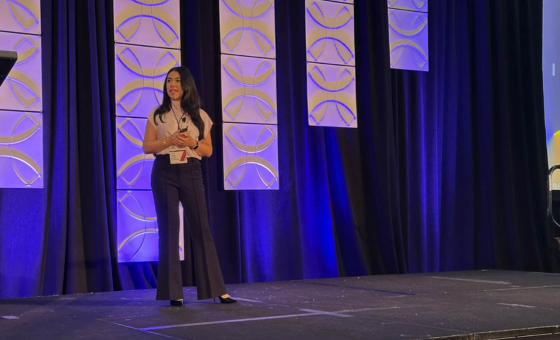
Celebrity interior designer Jennifer Farrell outlined upcoming design and consumer trends, notably that customers are not just looking for new looks, but comfort and peace. “The dream is not just a new space. It’s a happier life. Your clients are coming to you because they are looking not for a product. They are looking for a path to a better space and a better life.”
Farrell advised attendees to lean into their expertise — they are designers even if they don’t know it. “Your knowledge of flooring and surface materials and how to implement them, that is how you as a conscientious expert are leading that path to success.”
But that requires trust, she stressed. Let customers know, “I’m here for you. I think those are the most important words you can ever tell anyone, including a stranger. I’m here for you. I am listening to you. I hear you. I am here to support you. But that takes trust. Trust is earned, so earn it.”
In design, she said, “It is important to understand the world changed in 2020 and how it affected design needs right now because things that happened then have set the trajectory to where we’re going.”
Some of those changes and influences have manifested in organic shapes, dimensional tile, textural flooring and earth-inspired sustainable materials. “The client of today is not using sustainability as a throwaway tag word…they’re wanting to know how does this product survive? How was it made? Who made it?”
And “we’ve seen a resurgence of neoclassic parquet and flooring and what I like to refer to as a nouveau neoclassicism,” as well as arches, round edges and fluting. “Going back to things that we loved in our you feels really good. It gives you that sense of a connection to your past while still being hopeful towards the future.”
Residential Outlook
Sharyn Bernard, business and special projects editor for Floor Covering Weekly, moderated a panel of residential dealers to discuss the business outlook. Panelists included RT Bayles of Floor Authority, Donny Phillips of Atlanta Flooring Design Centers, Chuck Short of Real Floors, Cindy Warne of Barrett’s Flooring & Decorating Centers, Steve Write of Flooring Direct and Matt Lusk of Impact Property Solutions.
The overall outlook is mixed — there are opportunities but also challenges. “If I had one word for the residential market, I would say challenged at this particular point, but still there if you work for it,” Phillips said.
Lusk agreed, noting that working through the difficult times will help when the market turns. “Hard times make strong men, strong men make good times, good times make weak men. And I think that could be said in our business, in our company and in the industry in general. The teams that have stuck it out, salespeople that have stuck it out, and many are being very successful right now in the down times. So it can be done.”
Bayles said, the remodel market is strong, particularly due to high interest and mortgage rates. “You’ve got customers that bought their homes at 2 percent interest rates and they’re in a good place. They’re not going to buy a new house right now, but they are going to spend the money and remodel and fix up their current house.”
As well, strong financing programs are a good opportunity, Wright said, noting, “45 percent of our sales are financed right now, which is amazing. And we actually offer for the residents 36 months no interest if they qualify.”
Warne said while the labor market is tough, she has had a good experience. “Our ownership made huge investments in warehousing that helps just facilitate efficiency for our guys. We try to deliver stuff to job sites to keep them rolling so they’re not spending time moving product. So that way when they’re on the job, they’re installing so we can increase our efficiency. We’re very fortunate that we’ve got a really great group of guys that we pay every Friday. They’re very loyal to us.”
Short cautioned to not chase new customers at the expense of loyal existing ones. “You can’t sacrifice your existing customers by spending too much of your time soliciting new business and then take away from service because it’s much easier to keep a customer than it is to find a new customer.”
Lusk advised fellow members to bide their time for the market to turn. “Just hang on. It’s going to turn. We look at analytics every day and every market and we see it slowly getting there. There’s a little bit of light at the end of that tunnel and it’s not a train.”
Commercial Outlook
Bernard also moderated a panel of commercial dealers to gauge the market outlook. Panelists included Scott Wierson of Real Floors Commercial, Dean Carter of quality Floor Covering, Rod Owen Jr. of C.C. Owen Company, Mark Soriano of Jo-Mark Installations and Jerry Milton of Southeastern Interiors.
This sector also is mixed, the panelists reported. “It’s choppy,” Wierson said. “Nothing really has changed from when I started 25 years ago in this business to now. It’s all driven by relationship, but the opportunities seem to be a little bit more competitive, and the relationship seems to have taken not a backseat, but the cost is right up there with that relationship these days.”
Soriano said the market is crunched, “and it’s getting tighter and tighter. There is compression and more people are going after the same work and driving the numbers down.” In addition, he said one of the biggest issues is costs, particularly since all his installers are employees, not subs. “As time goes on and you got these employees for 28 to 30 years, the cost to carry them just keeps rising. We keep them because they’re so good and that’s what built us. But it’s harder to compete with the market when I’m bidding against somebody that just started or is in business five years.”
Owen reported that the market has extreme highs and lows. “We hear about the K market where there’s a lot of sectors in the industry that seem to be doing fine, whereas others are declining. I do see stability in healthcare that continues to grow. Higher education continues to grow. Some of government work, specifically Department of Defense or War, seems to be getting a lot of funding. And then the other term I’d use is volatile. Our current backlog is good for probably the next 24 months.” He added that it’s particularly volatile due to high interest rates and energy costs. “Even a quarter of a point when you’re talking about a private developer that is doing a $500 million project, that quarter of a point makes a big difference.”
Milton said the biggest opportunity for his company is healthcare and hospitality. “The hospitality market on our end is really growing in our area. Hospitals, schools, and higher education, that’s our general market and they seem to be strong and probably will for the next 24 months. But after that, we’re always looking to see something else we can do or add to try to offset.”
Carter said he is focusing on his relationships so when the market improves, he is ready. “I would advise that you stay close with your customer base and your relationships and keep your relationships close to your chest and visit them more often. As much as it’s moved away from a personal in face content, I believe you can get in there, you can see these people, you can embrace with them and stick with them.”